- Rehman
- 3:30 am
- April 29, 2026
AI-Powered Search Has Changed the Rules
This represents a major turning point in digital marketing.
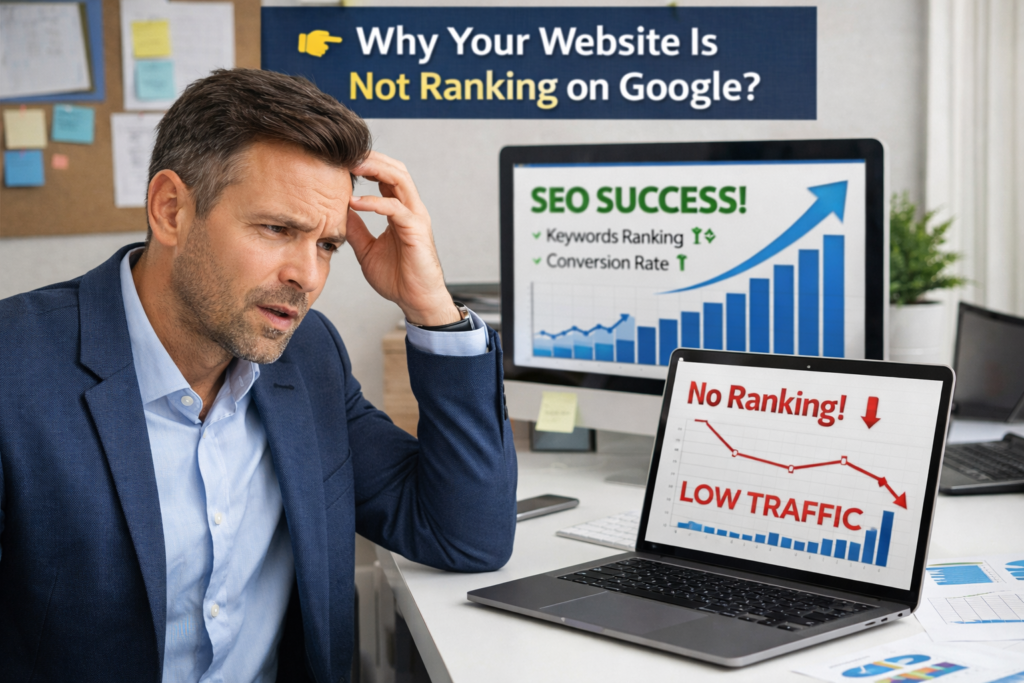
In 2026, the search bar has evolved into a new creative canvas. Consumers are using AI-powered tools to bring their queries to life — expecting AI to understand their thoughts, not just what they type. Brands are now expected to provide more tangible, authoritative, and visual answers.
What does this mean practically? Google’s AI Overviews, ChatGPT, Perplexity, and other AI search tools are now directly answering questions — pulling content from websites they consider authoritative and presenting it without requiring the user to click through.
The era of the “Google-default” mindset is over. Discovery now happens across platforms, feeds, and AI systems. Today’s SEO is drifting more toward “search everywhere optimization” — because your audience isn’t just Googling anymore.
This has led to a new approach called Generative Engine Optimization — creating content not just to rank on search engines, but to be picked up and mentioned by AI tools.
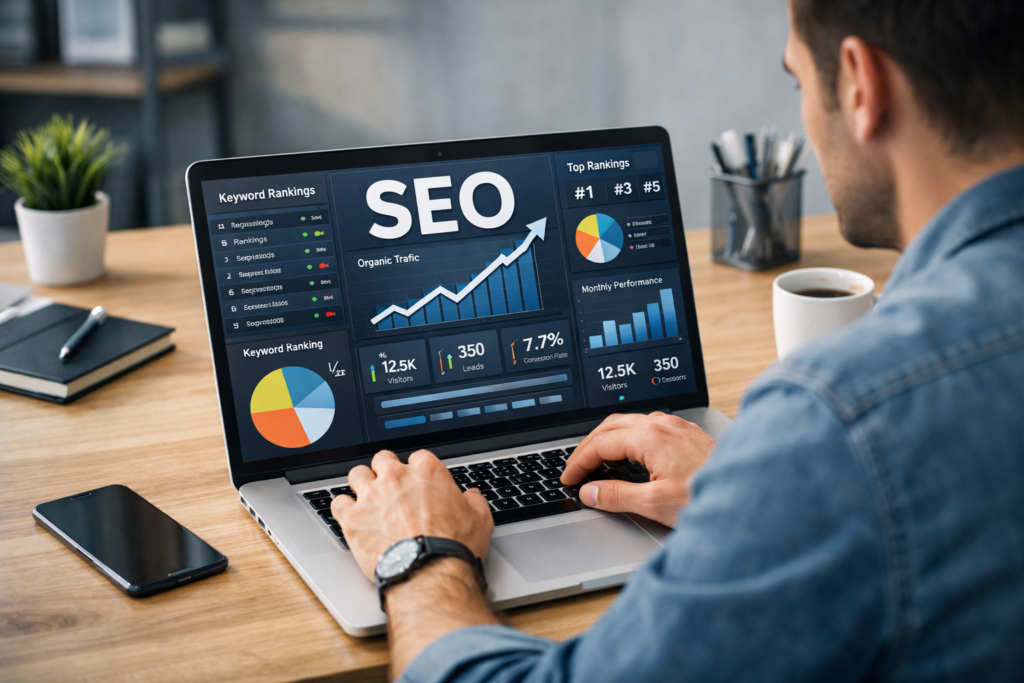
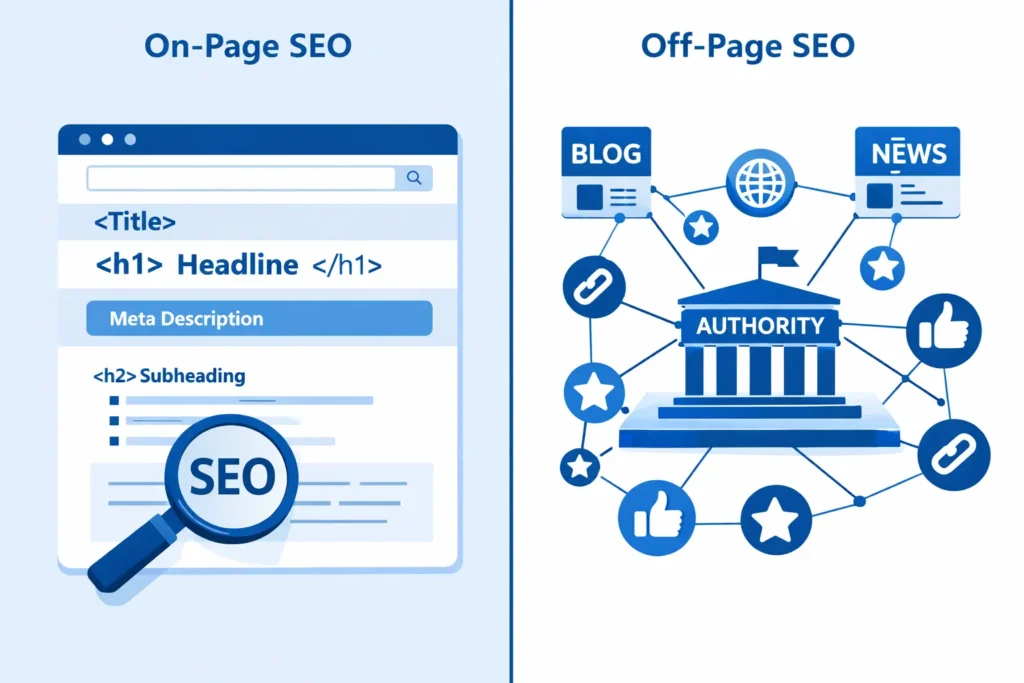
The new requirement is to create content that works well in both traditional search results and AI-generated answer environments. That means clear structure, direct explanations, expert-led content, original insights, evidence-based claims, strong topical coverage, and language that answers real questions cleanly.
What to do:
- Structure your content using clear H2 and H3 headings that directly answer specific questions.
- Add a well-written FAQ section to every post (schema markup included)
- Write with authority — cite data, share original insights, demonstrate real expertise.
- Make sure your SEO strategy accounts for AI search, not just traditional rankings
"Search Everywhere" Is Now a Survival Requirement
- Identify where your ideal clients spend time and actively search for solutions.
- Repurpose every piece of content across multiple platforms — a blog post becomes a LinkedIn article, a Pinterest pin, a short video script.
- Optimize for each platform’s specific algorithm and format expectations.
- Build your Pinterest presence with keyword-rich descriptions (exactly what we’ve been doing for Alpha Digitix)
Short-Form Video Is the Highest-Converting Content Format

Short-form video remains one of the most powerful tools in digital marketing for 2026 — especially for businesses that depend on trust and quick decision-making. Customers want transparency, education, and realistic expectations — and video delivers that in a way static ads simply cannot.
Instagram Reels, TikTok, YouTube Shorts — these aren’t just entertainment platforms anymore. They’re discovery engines. People are finding new businesses, comparing service providers, and making purchasing decisions based on short video content.
Advanced video formats — including interactive, shoppable, and live-streamed videos — are becoming standard. Interactive videos drive engagement, while shoppable videos simplify the process of converting viewers into buyers.
And here’s the data point that should change how you think about video: among brands, the average number of daily posts has decreased to 9.5, but engagement is moving in the opposite direction — inbound interactions have increased by roughly 20% year over year. Quality beats volume, every time.
What to do:
- You don’t need a production team. You only need a smartphone, good lighting, and a clear message to begin.
- Make 30–90 second educational videos that address the most frequently asked questions from your clients.
- Consistency matters more than perfection — one quality video per week outperforms ten mediocre ones.
- Use consistent branding and visuals in all your videos to strengthen brand recognition.
Marketing Automation Is No Longer Optional
Manual marketing is slow, expensive, and full of errors. In 2026, the most successful businesses are those that automate repetitive tasks, allowing their teams to focus on strategy and building relationships.
Email workflows, lead segmentation, ad targeting, A/B testing, and performance reporting are all automated in 2026. Platforms like HubSpot and Google Ads now prioritize automation-first setups by default. Manual processes create cost drag — automated campaigns run faster, test more variations, and reduce errors.
Automation doesn’t mean losing the human touch. It just means delivering the right message to the right person at the right time — without requiring manual sending or triggering every time.
A lead fills out a contact form at 11 pm. An automated response lands in their inbox within seconds, confirms their submission, and sets expectations. A follow-up sequence begins over the next 7 days. By the time a human follows up, the prospect is already warm and informed.
That’s the power of automation done right.
What to do:
- Set up automated email sequences for every lead entry point on your website.
- Leverage CRM tools such as HubSpot, ActiveCampaign, or Mailchimp to organize your audience and automate follow-up messages.
- Use automation for your social media scheduling to ensure consistent posting, even when you’re busy or unavailable.
- Consider a virtual assistant to manage the systems and workflows that still require a human touch.
Hyper-Personalization Drives Conversion
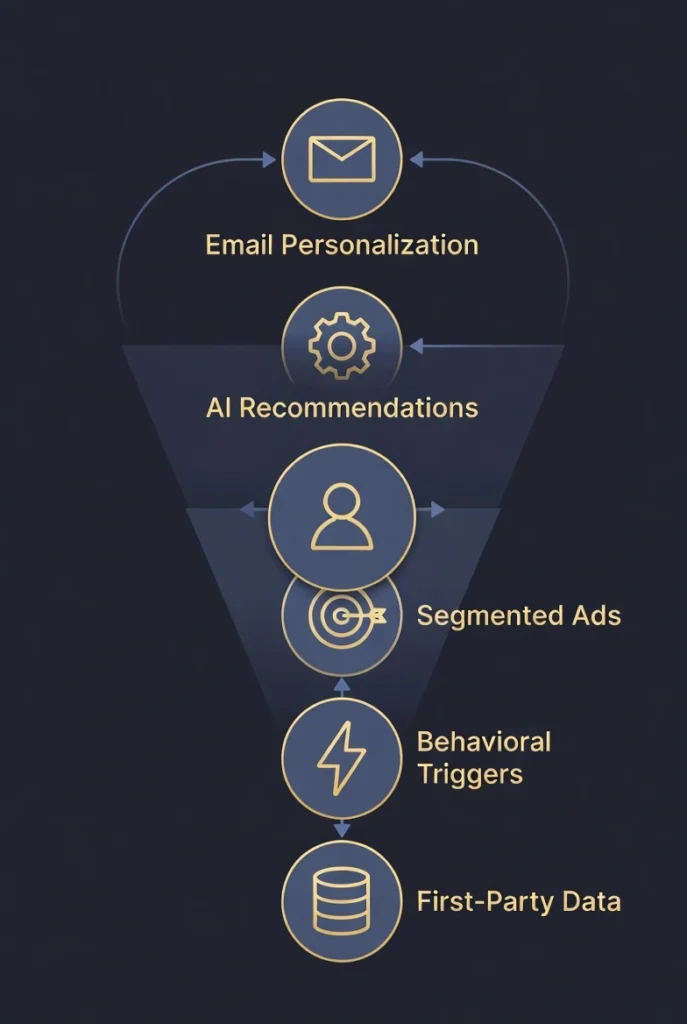
Generic marketing is losing its effectiveness fast. In 2026, customers expect to be spoken to as individuals — not as part of a mass audience.
AI-supported personalization is now a core digital marketing trend — it’s how buyers discover brands, evaluate options, and make smart spending decisions. The focus is on volume-based tracking relevance through context.
Hyper-personalization goes far beyond using someone’s first name in an email subject line. It actually means:
- Showing different website content to different audience segments based on behavior
- Sending emails triggered by specific actions — what someone clicked, what page they visited, what they downloaded.
- Running remarketing ads that reference exactly what a prospect looked at on your website
- Creating content that speaks directly to a specific industry, role, or pain point — not a general audience
Businesses now personalize using first-party and zero-party data — what users actively do and what they directly tell you. Consent-driven data is more accurate and trusted than third-party tracking. The focus is on relevance through context, not volume through surveillance.
What to do:
- Start collecting first-party data intentionally — surveys, preference centers, behavior tracking on your own website
- Segment your email list by industry, interest, or stage in the buyer journey
- Create landing pages tailored to specific audience segments rather than one generic page for everyone
- Personalize your follow-up sequences based on where a lead came from and what they engaged with
Content Quality Now Determines Visibility
- Audit your existing content — update underperforming posts with fresh data, better structure, and more depth
- Focus on creating the single best resource on each topic you cover — not just another version of what’s already out there
- Add original data, agency insights, case study references, and expert perspectives to every piece
- Build topic clusters — a pillar page on a broad topic supported by multiple related posts that all link together
What All of These Trends Mean for Your Business

Here’s the practical reality: you don’t need to implement every trend at once. But ignoring them entirely is how businesses fall behind.
The thread connecting all six trends above is the same: quality, trust, and relevance are now the currency of digital marketing. The businesses that invest in genuine expertise, well-crafted content, strong technical foundations, and consistent multi-channel presence will grow. Those that don’t will find it harder and harder to compete — regardless of how much they spend on ads.
Here’s a simplified priority framework based on where most businesses are right now:
| Priority | Action |
|---|---|
| 🔴 Immediate | Update your SEO strategy for AI search and GEO |
| 🔴 Immediate | Ensure your website is fast, mobile-friendly, and technically sound |
| 🟡 This Quarter | Start creating short-form video content for your key platforms |
| 🟡 This Quarter | Set up basic marketing automation and lead nurturing sequences |
| 🟢 Ongoing | Build content quality consistently — one excellent piece beats ten average ones |
| 🟢 Ongoing | Collect first-party data and personalize your messaging over time |
The good news? You don’t have to figure all of this out alone.
At Alpha Digitix, we work with businesses to implement exactly these strategies — from SEO built for 2026’s AI search landscape to lead generation systems that convert. Whether you need a complete digital marketing strategy or help with one specific area, our team is ready to help you move forward.
Conclusion
Digital marketing in 2026 rewards businesses that adapt — and leaves behind those that don’t. AI search has changed how people find information. Short-form video has changed how brands build trust. Automation leads are nurtured. Personalization has changed what customers expect. And content quality has become the single most important factor separating brands that grow from brands that plateau. The trends above aren’t predictions. They’re already happening. The question is whether your business is positioned to take advantage of them. Start with one. Build momentum. And if you want a partner to help you navigate the shift, get in touch with Alpha Digitix — and let’s build a digital marketing strategy that’s built for where the world is going.
Frequently Asked Questions (FAQ)
AI-powered search is the most impactful shift in 2026. Google's AI Overviews, ChatGPT, and Perplexity are changing how people find information — moving from keyword-based results to conversational, AI-generated answers. Today, businesses must optimize for both search engine rankings and AI citations, a discipline known as Generative Engine Optimization (GEO).
Absolutely — but it has evolved. Traditional keyword-focused SEO is less effective on its own. In 2026, SEO It is motivated. by deep topic coverage, strong E-E-A-T signals, structured data, and content that clearly and fully answers user questions. Sites that adapt to AI search while maintaining strong traditional SEO fundamentals are the ones growing their organic traffic.
Extremely important. Short-form video is now the highest-engagement content format across all social platforms. It's also becoming a primary discovery channel — people find new businesses through Reels, TikTok, and YouTube Shorts before visiting a website. For service-based businesses, educational short-form videos build trust faster than any other type of content.
First-party data is information you collect directly from your audience — through your website, email list, CRM, and surveys. As third-party cookies are phased out and data privacy regulations tighten, first-party data has become the foundation of personalized marketing. Businesses that build strong first-party data systems now will have a significant competitive advantage.
Not all at once. Prioritize based on your current situation or position. If your SEO foundation isn't solid, start there. If your leads aren't converting, build your automation and nurturing systems first. If you have zero video presence, start with one simple format on one platform. Focused, consistent implementation of one or two trends will outperform scattered attempts at all of them.