- Rehman
- 2:36 pm
- April 22, 2026
Every business owner eventually hits this question — and it’s one of the most important decisions you’ll make in your digital marketing journey.
You want more traffic. You want more leads. You want your business to show up when potential customers search for what you offer. But when it comes to actually making that happen, you’re looking at two very different roads: SEO and Google Ads.
One is free but slow. The other is fast but costs money every single day. And depending on who you ask, you’ll get completely different answers about which one is “better.”
Here’s the truth: the right answer depends entirely on your business, your budget, and where you are right now. This guide will give you a clear, honest breakdown of both — so you can stop guessing and start investing in the right direction.
What Is SEO?
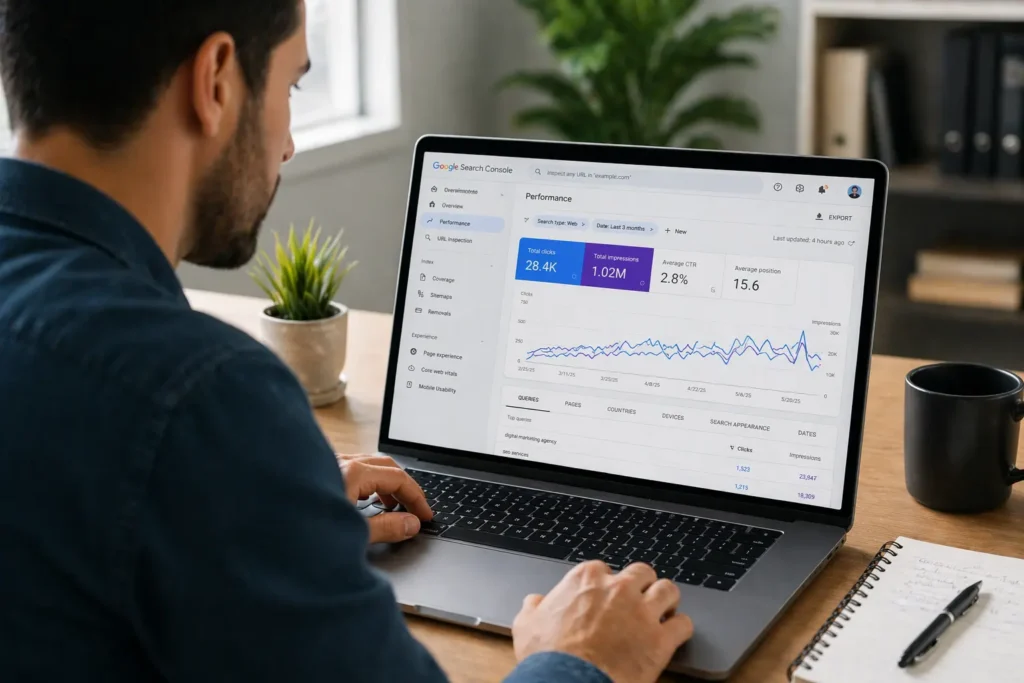
SEO — Search Engine Optimization — is the process of optimizing your website so it appears organically in Google search results when people search for keywords related to your business.
When someone searches “digital marketing agency UAE” and clicks on a result that isn’t an ad, that’s SEO at work. The business didn’t pay for that click. They earned it by creating valuable content, building authority, and optimizing their site for what Google rewards.
SEO covers three main areas:
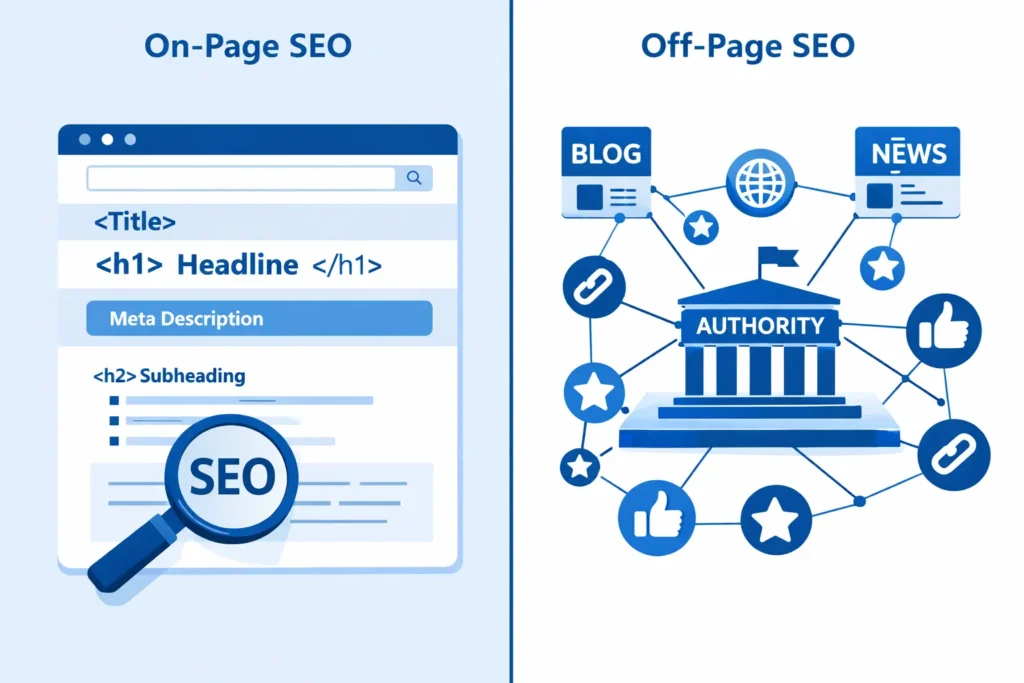
- On-Page SEO — Optimizing your content, keywords, headings, and meta tags
- Off-Page SEO — Building backlinks and domain authority
- Technical SEO — Ensuring Google can crawl, index, and understand your site
The biggest advantage of SEO is that once you rank, the traffic is essentially free. You don’t pay per click. You don’t pay per visitor. Your rankings work for you 24 hours a day, seven days a week — even when you’re sleeping.
The tradeoff? SEO takes time. Results typically begin showing in 3–6 months, and building strong, sustainable rankings in competitive niches can take 6–12 months or longer.
At Alpha Digitix, our SEO services are built for exactly this — creating a long-term organic traffic engine that keeps delivering results month after month.
What Is Google Ads?
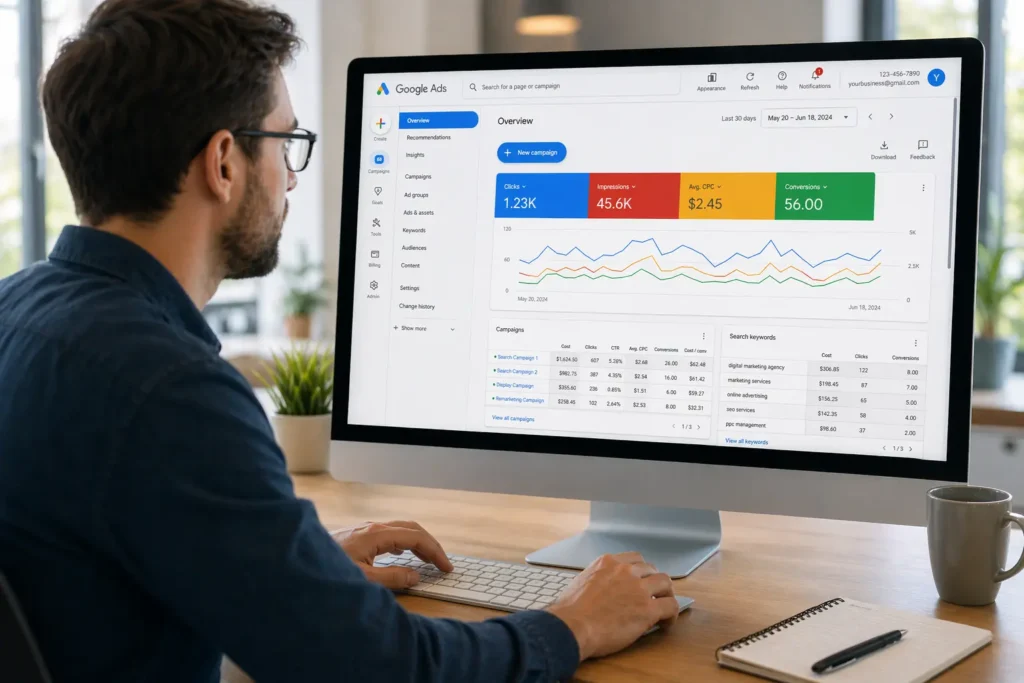
Google Ads — formerly known as Google AdWords — is Google’s paid advertising platform. You bid on keywords, and when someone searches for those terms, your ad appears at the top of the results page — above all organic rankings.
You pay only when someone clicks your ad. That’s why it’s called Pay-Per-Click (PPC).
Google Ads includes several campaign types:
- Search Ads — Text ads that appear at the top of Google search results
- Display Ads — Banner ads shown across websites in Google’s network
- Shopping Ads — Product listings with images and prices for e-commerce
- Performance Max — AI-driven campaigns across all Google properties
The biggest advantage of Google Ads is speed. Your ads can go live within hours of launching a campaign — while SEO typically takes 3–6 months before you see significant organic ranking improvements.
The tradeoff? The moment you stop paying, the traffic stops. There’s no residual effect. No compounding growth. Once your budget runs dry, you disappear from results entirely.
SEO vs Google Ads: The Real Comparison
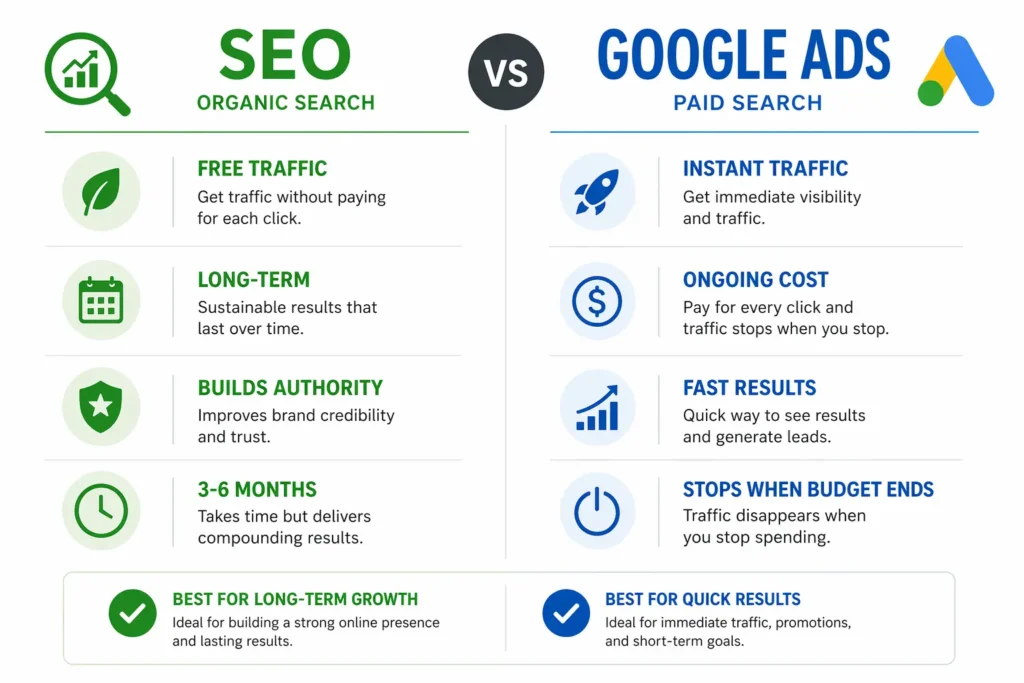
Let’s put both side by side where it actually matters — cost, speed, trust, and long-term value.
| Factor | SEO | Google Ads |
|---|---|---|
| Cost per click | Free (after investment) | Paid — every click costs money |
| Time to results | 3–6 months minimum | Hours to days |
| Traffic when you stop | Continues (rankings stay) | Stops immediately |
| Trust & credibility | High — users trust organic results | Lower — users know it’s an ad |
| Long-term ROI | Compounds over time | Constant spend required |
| Control | Algorithm-dependent | Full control over targeting |
| Best for | Long-term growth, brand authority | Fast results, product launches, testing |
| Scalability | Slow but sustainable | Fast but expensive at scale |
Studies show SEO delivers around 3x more leads at roughly one-fifth the cost compared to Google Ads — but requires a 6-month ramp-up period before results become significant.
That’s a striking difference. But it doesn’t mean Google Ads is the wrong choice — it means timing and context matter enormously.
When SEO Is the Right Choice
SEO wins when you’re thinking long-term and building something that lasts. Here’s when to prioritize it:
Choose SEO when:
- You want traffic that doesn’t stop the moment your budget does
- You’re building brand authority in your industry over time
- Your business is in a niche where content marketing drives trust — services, agencies, education, consulting
- You have 6–12 months of patience before expecting significant returns
- You want to reduce your long-term customer acquisition cost
- You’re targeting informational keywords where readers research before buying
In markets with high cost-per-click rates and long buying cycles, SEO often delivers stronger ROI by capturing demand across multiple stages of the customer journey.
For a digital agency like Alpha Digitix, SEO is the backbone of our own growth strategy — and for our clients, it’s how we build traffic engines that deliver leads consistently without an ongoing ad spend.
When Google Ads Is the Right Choice
Google Ads wins when you need results now — and when you have the budget to sustain it. Here’s when it makes sense:
Choose Google Ads when:
- You’re launching a new product or service and need immediate visibility
- You’re in a highly competitive market where SEO would take years
- You want to test which keywords actually convert before investing in long-term SEO
- Your offer is time-sensitive — a promotion, event, or seasonal campaign
- Your profit margins justify a cost per acquisition from paid clicks
- You need leads this week, not in six months
For businesses where each customer is worth significant lifetime value, paying a higher cost per acquisition through Google Ads remains profitable — and the speed of results justifies the spend.
The key is knowing your numbers. If your average client is worth $2,000 and a Google Ads campaign brings in leads at $150 each, the math works clearly in your favor.
The Smartest Strategy: Using Both Together
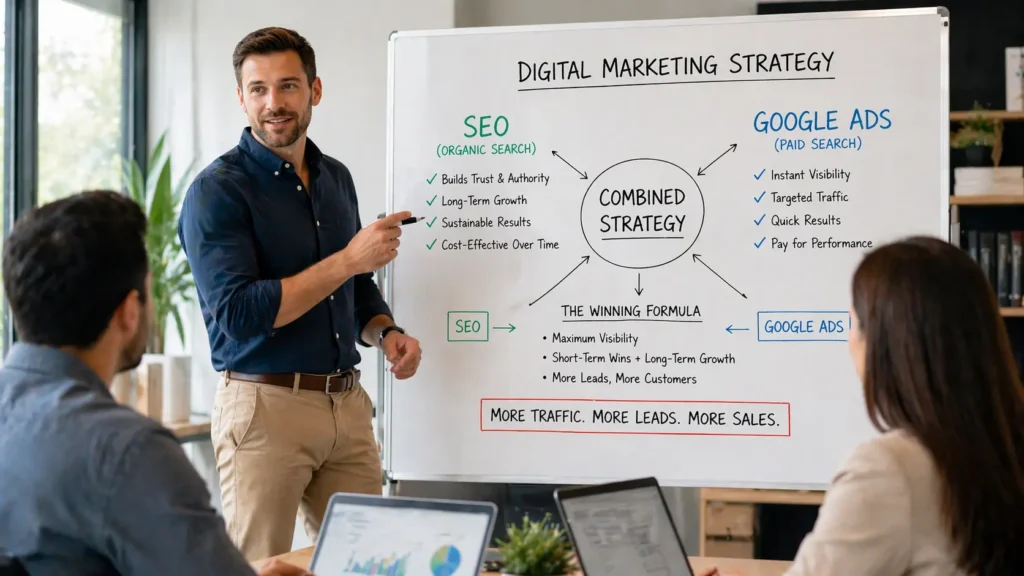
Here’s what most comparison articles won’t tell you — the businesses winning online in 2026 aren’t choosing between SEO and Google Ads. They’re using both strategically.
For most serious businesses, the best strategy combines both: Ads generate fast feedback and leads while SEO builds long-term market presence and trust.
Here’s what a smart combined timeline looks like:
Months 1–3: Run Google Ads to generate immediate traffic and leads. Use the data — which keywords convert, which landing pages perform — to inform your SEO content strategy. Start SEO work in parallel.
Months 3–6: SEO begins gaining traction. Early rankings appear for lower-competition keywords. Google Ads continues driving volume while organic traffic slowly builds.
Months 6–12: Core SEO keywords begin ranking. Start reducing Google Ads spend on keywords where organic rankings are already strong. Reallocate that budget toward new campaigns or higher-competition terms.
Month 12+: SEO carries the majority of your traffic load. Google Ads become a precision tool — used for competitive keywords, remarketing, and time-sensitive campaigns — rather than your primary traffic source.
This approach gives you the speed of paid advertising in the short term and the compounding, cost-efficient growth of SEO in the long term.
Which One Is Right for Your Business Right Now?
Use this simple decision framework:
Go with SEO if: You have a limited budget and need traffic that compounds You’re building a long-term brand and content strategy You can wait 6–12 months for results to fully kick in You’re in services, consulting, education, or any trust-based industry
Go with Google Ads if: You need leads immediately — this month, not next quarter You have a clear offer with a strong profit margin You’re launching something new and need fast market feedback You’re in a competitive space where organic rankings take years
Go with both if: You have budget for both and want maximum visibility You’re scaling fast and need a sustainable long-term strategy You want to use Ads data to fuel smarter SEO decisions
Whatever direction you choose, the execution matters as much as the strategy. Poorly managed Google Ads waste money fast. Poorly executed SEO produces no results for months. Both need to be done right.
If you want expert help building an SEO strategy that delivers consistent organic growth — or want to explore whether a combined approach makes sense for your business — our team at Alpha Digitix is ready to help. Explore our SEO services or learn how our lead generation services can support your paid strategy.
Conclusion
SEO and Google Ads aren’t competitors — they’re two different tools built for different jobs.
SEO builds a long-term asset. It’s slower, but it compounds. Every ranking you earn keeps delivering traffic without ongoing cost. Google Ads gets you in front of buyers today. It’s faster, but it requires continuous investment to maintain results.
The best approach for most businesses is a smart combination of both — and the right balance depends on your goals, timeline, and budget.
What matters most is that you stop guessing and start making informed decisions. Whether that means investing in organic SEO, launching targeted Google Ads, or building a strategy that uses both — the key is to start.
Get in touch with Alpha Digitix today, and let’s build a digital marketing strategy that actually fits your business.
Frequently Asked Questions (FAQs)
It depends on your budget and timeline. SEO is more cost-effective long-term and keeps delivering traffic without ongoing spend. Google Ads delivers faster results but requires continuous investment. For small businesses with limited budgets and long-term goals, SEO is often the smarter starting point — with Google Ads added once revenue supports it.
Google Ads can show results within hours of launching. SEO typically takes 3–6 months to show meaningful ranking improvements and 6–12 months to build strong authority in competitive niches. However, SEO results compound over time while Google Ads stops the moment you stop paying.
Absolutely — and for most growing businesses, running both simultaneously is the smartest approach. Google Ads provides immediate traffic while your SEO builds momentum. The data from your Ads campaigns also helps you identify which keywords to prioritize in your SEO strategy.
Yes — especially in the early stages when your site has no organic authority yet. Google Ads lets you appear at the top of results immediately, generate leads, and test which messages resonate with your audience. As your SEO grows, you can gradually reduce your ad spend on keywords where you rank organically.
Over the long term, SEO typically delivers better ROI because the traffic is free once you rank. However, Google Ads can deliver faster ROI in the short term, especially for high-intent commercial keywords. The highest ROI usually comes from using both strategically — paid for speed, organic for long-term cost efficiency.