- Rehman
- 1:04 pm
- April 14, 2026
Graphic design trends in 2026 are reshaping the way businesses communicate, connect, and compete — and if your brand is still using the same visuals from three years ago, you are already falling behind.
Here is the truth most people do not talk about: design is not just decoration. It is the first impression your business makes, and in today’s fast-moving digital world, first impressions happen in less than a second. A study by Missouri University of Science and Technology found that users form an opinion about a website in as little as 0.2 seconds — and that opinion is almost entirely based on design.
Whether you run a small startup, manage an e-commerce brand, or offer professional services, staying current with graphic design trends in 2026 is one of the smartest investments you can make for your business. Not because trends are everything, but because modern design signals trust, professionalism, and relevance — three things every customer is looking for before they decide to work with you.
In this guide, we break down the ten most important graphic design trends shaping 2026, explain why they matter, and show you how to apply them in a way that actually grows your business.
Why Graphic Design Trends Matter More Than Ever
Before we dive into the trends, it is worth understanding why design matters so deeply for business growth.
Think about the brands you trust most — Apple, Nike, Airbnb. Their design is not an accident. It is a carefully crafted strategy that communicates quality, builds emotional connection, and keeps customers coming back. The same logic applies to every business, no matter the size.
When your design is outdated, customers do not just think your visuals are old — they question whether your business is keeping up. On the other hand, a fresh, modern design instantly communicates that you are professional, current, and worth paying attention to.
Following the right graphic design trends in 2026 helps you attract attention faster, build trust more easily, and convert visitors into paying customers. That is not a small thing — that is your entire brand working for you around the clock.
You can also explore our Graphic Design Services to see how we help businesses build visual identities that actually convert.
Top Graphic Design Trends in 2026
1. Minimalist and Clean Design
Minimalism has been a strong design direction for years, and in 2026 it is stronger than ever — but it has evolved.
Today’s minimalism is not just about removing things. It is about intentional simplicity. Brands like Google, Apple, and Notion have proven that when you strip away the clutter, your message lands harder and faster.
Clean layouts, generous white space, and simple typography make your design easier to read and more pleasant to look at. For businesses, this translates directly into better user experience, faster website load times, and a more premium brand perception.
If your current design feels busy or complicated, simplifying it could be one of the most impactful changes you make this year.
2. Bold Typography
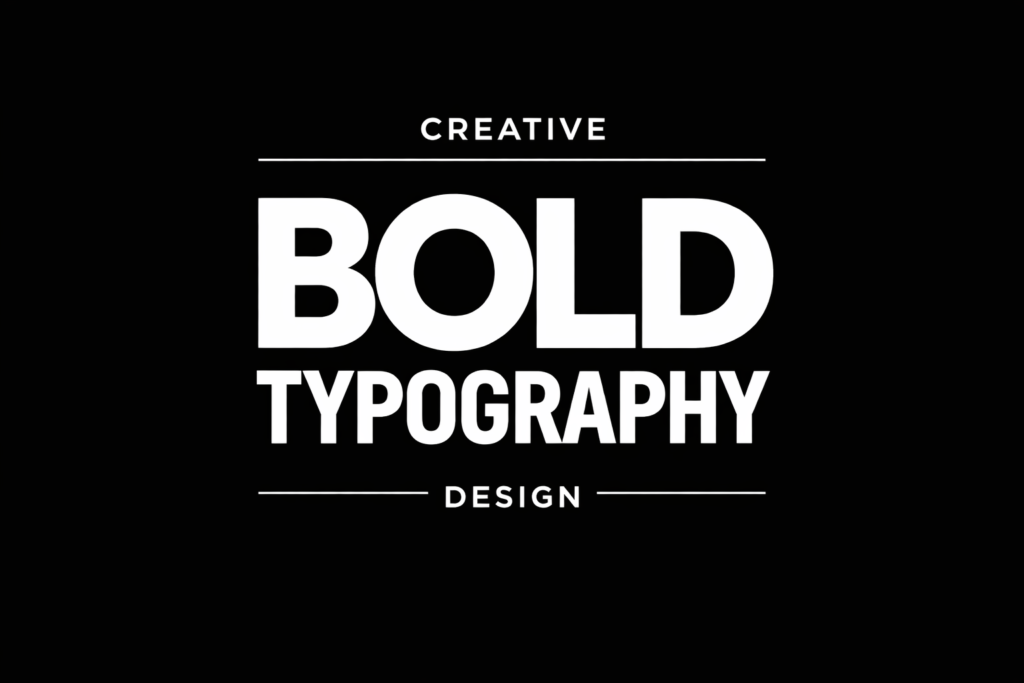
Typography has quietly become one of the most powerful design tools of 2026.
Brands are no longer treating fonts as an afterthought. Instead, large, bold, expressive fonts are being used as the hero of the design itself — sometimes replacing images entirely. You see this trend everywhere from Spotify campaigns to luxury fashion brands, where the words themselves carry the visual weight.
The reason this works so well is simple. In a world full of images and videos, a strong typographic statement stands out. It is direct, confident, and impossible to ignore. For businesses, bold typography signals authority and makes your message land faster across social media, ads, and websites.
3. 3D and Hyper-Realistic Elements
Three-dimensional design elements have moved from being a novelty to becoming a mainstream expectation in 2026.
What makes 3D so effective is depth. It makes digital designs feel tangible and real, which creates a stronger emotional response from viewers. Brands using 3D elements in their product pages, ads, and social media content report higher engagement and better click-through rates compared to flat design alternatives.
Nike’s product showcases and Samsung’s advertising campaigns are great examples of how 3D visuals can make a product feel premium before the customer even touches it. If your business sells physical products, incorporating 3D visuals into your design could meaningfully improve how customers perceive your brand.
4. AI-Assisted Design
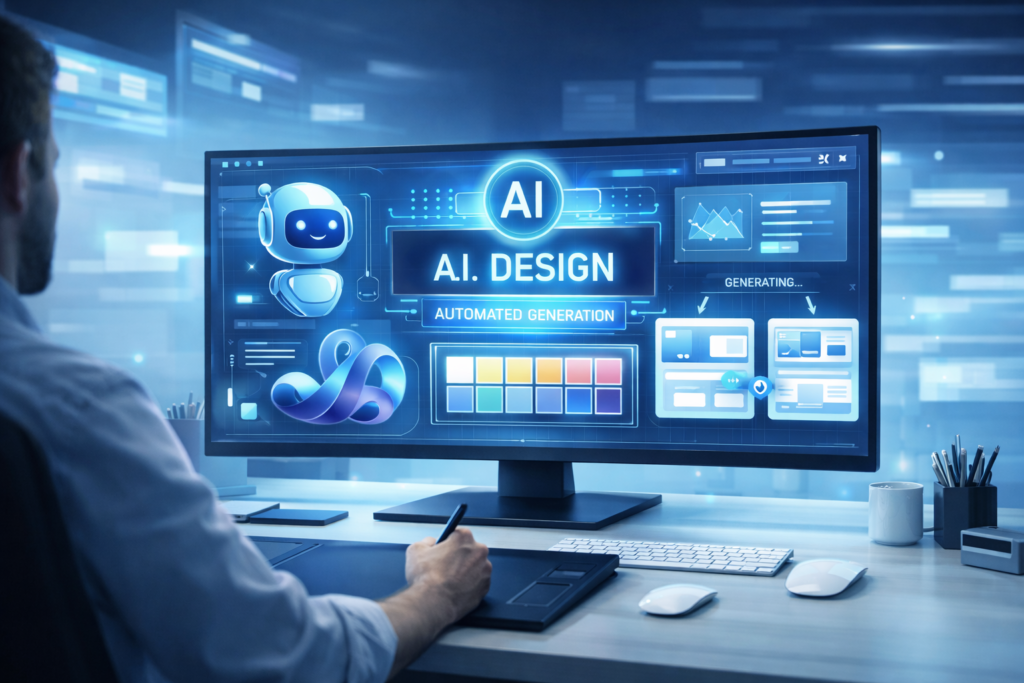
Artificial intelligence is not replacing designers — it is making great designers even better.
Tools like Adobe Firefly, Midjourney, and Canva AI are helping design teams generate concepts, create assets, and explore creative directions in a fraction of the time it used to take. This means faster turnaround, more creative options, and lower production costs for businesses.
The key distinction here is the word “assisted.” AI handles repetitive and generative tasks, while human creativity handles strategy, storytelling, and brand alignment. The businesses winning with this trend are those using AI as a creative accelerator — not a shortcut that skips thinking.
5. Gradient Color Schemes
Remember when gradients felt outdated? That era is long gone.
Gradients are back in a big way in 2026, but they look nothing like the harsh transitions of the early 2000s. Modern gradients are soft, smooth, and atmospheric — they add depth and warmth to designs without overwhelming them.
Instagram’s iconic gradient logo helped revive the trend, and since then brands across industries have been embracing it. Gradients work particularly well for tech companies, wellness brands, and creative agencies that want to communicate energy, creativity, and forward-thinking values through color alone.
6. Motion Graphics and Micro-Animations
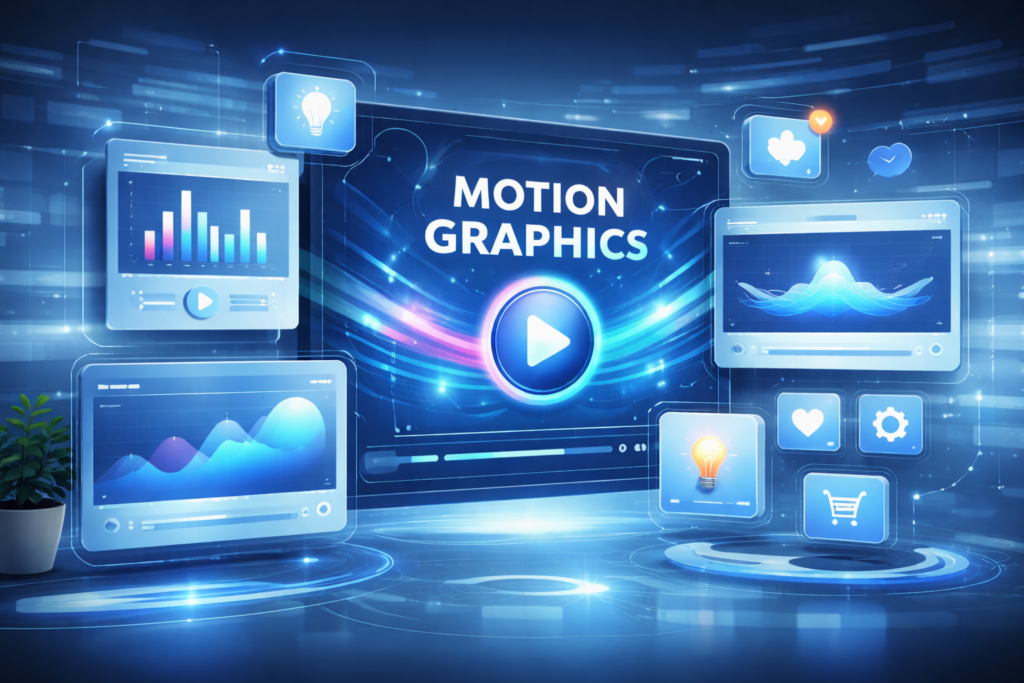
If a picture is worth a thousand words, a motion graphic is worth ten thousand.
In 2026, motion design has become essential — not optional. From subtle hover animations on websites to full animated social media posts, movement captures attention in a way static design simply cannot. Research from HubSpot shows that animated content consistently outperforms static content in engagement across every major platform.
The good news is you do not need a full video production budget to leverage this trend. Even small micro-animations — a button that subtly pulses, a logo that fades in smoothly, or an icon that bounces on scroll — can significantly improve user experience and make your brand feel more alive and modern.
7. Dark Mode Design
Dark mode has gone from being a trendy feature to a user expectation.
A survey by Android Authority found that over 91% of users prefer dark mode when it is available. This preference is driven by reduced eye strain, better battery performance on OLED screens, and — quite simply — a design aesthetic that looks premium and modern.
For businesses, this means designing with dark mode in mind from the start rather than treating it as an afterthought. Brands that offer seamless dark mode experiences feel more considerate of their users, which builds loyalty and trust over time.
8. Custom Illustrations
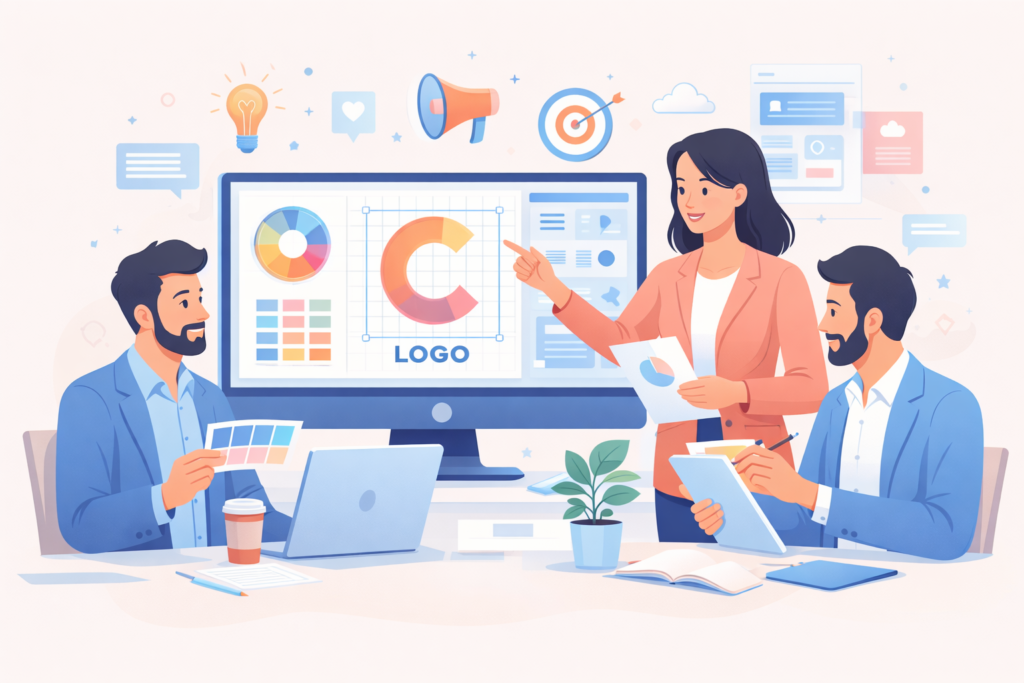
Stock photos are losing the battle for authenticity — and custom illustrations are winning.
More businesses in 2026 are investing in unique, hand-crafted or digitally created illustrations that reflect their brand personality. Brands like Mailchimp and Slack have built strong visual identities through consistent illustration styles that feel human, approachable, and distinctly theirs.
The advantage of custom illustrations is that they cannot be replicated. Your visuals become part of your brand identity rather than something anyone can download from a stock site. For businesses looking to stand out in crowded markets, this investment pays off quickly in recognition and brand recall.
9. Retro and Vintage Aesthetics
There is something deeply human about nostalgia, and smart brands are using it to their advantage.
Retro design — think warm muted tones, grainy textures, vintage typography, and analog-inspired layouts — creates an emotional connection that modern hyper-clean design sometimes lacks. It feels personal, handcrafted, and real in a digital world that can often feel cold and automated.
This trend works especially well for food and beverage brands, lifestyle businesses, independent creators, and any brand that wants to communicate heritage, warmth, and personality. The key is combining vintage elements with modern functionality so your design feels nostalgic — not outdated.
10. Data Visualization and Infographic Design
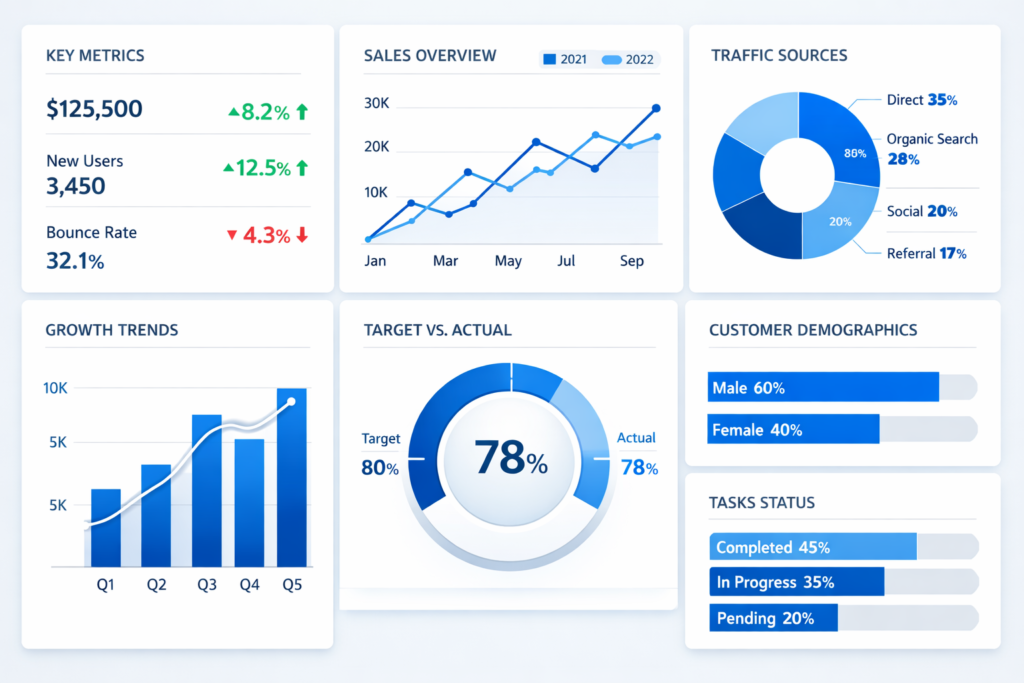
We live in an age of information overload. People do not have the patience to read walls of text — they want to understand things quickly and visually.
Data visualization design turns complex information into clear, engaging, and shareable visual content. From infographics and interactive charts to visual reports and comparison tables, this trend is becoming a core content strategy for businesses across every industry.
The added benefit of well-designed data visualization is shareability. A beautifully designed infographic gets shared far more than a block of text covering the same information, which makes it an incredibly effective tool for both organic reach and brand authority.
How to Apply These Trends Without Losing Your Brand Identity
ne of the most common mistakes businesses make is chasing every new design trend without considering whether it fits their brand.
Trends are tools, not rules. The goal is not to implement all ten trends listed above — it is to identify which two or three align with your brand values, your audience, and your business goals, and then execute them with intention and consistency.
Start by auditing your current design. Ask yourself honestly: does it feel current? Does it communicate what your brand stands for? Does it match the quality of the product or service you deliver? If the answer to any of these is no, that is your starting point.
From there, pick one area to improve first — your website, your social media graphics, or your brand logo — and make the change with quality. One well-executed design update will always outperform ten rushed, trend-chasing changes.
If your website is struggling to attract and convert visitors, it might not just be a design issue — read our guide on why your website is not ranking on Google for a broader perspective.
Common Design Mistakes to Avoid in 2026
Even with the best intentions, design can go wrong. Here are the most common mistakes to avoid as you update your visuals this year.
Overcomplicating your design is the biggest trap. When businesses try to include too many elements, colors, fonts, and effects, the result feels chaotic and unprofessional. Simplicity is almost always the right answer.
Ignoring consistency is another frequent mistake. Your colors, fonts, and visual style should be the same across your website, social media, and marketing materials. Inconsistent design makes your brand look disorganized and untrustworthy.
Copying competitors might seem safe, but it is a fast road to irrelevance. Your design should communicate what makes your business different — not what makes it similar to everyone else in your industry.
Finally, skipping mobile optimization is a mistake no business can afford in 2026. The majority of your audience is viewing your design on a phone. If your visuals do not look clean, clear, and functional on mobile, you are losing customers every single day.
Conclusion
Graphic design trends in 2026 are more than just a style update — they are a reflection of how people want to experience brands in a world that is noisier, faster, and more visual than ever before.
The businesses that thrive are not necessarily the ones with the biggest budgets. They are the ones that understand the power of design and use it strategically to communicate clearly, connect emotionally, and convert consistently.
You do not need to overhaul everything overnight. Start with the trends that feel most relevant to your brand, make thoughtful changes, and measure the impact. Over time, those small design improvements compound into a brand identity that people recognize, trust, and choose — over and over again.
Ready to Give Your Brand a Modern, Professional Look?
At Alpha Digitix, we help businesses build visual identities that do more than look good — they drive real results. From brand identity design and logo creation to social media graphics and complete website design, our team brings creativity and strategy together to make your brand stand out.
Get in touch today and let’s build something that truly represents your business. Contact Us
Frequently Asked Questions (FAQs)
The leading graphic design trends in 2026 include minimalist design, bold
typography, 3D visuals, AI-assisted design, gradient color schemes, motion
graphics, dark mode aesthetics, custom illustrations, retro styles, and data
visualization design.
Design directly impacts how customers perceive your brand. Modern, strategic
design builds trust, improves user experience, and increases conversions.
Outdated design can make even a great business appear unprofessional or
irrelevant.
No. Trying to implement every trend at once often leads to inconsistent,
cluttered design. Choose two or three trends that align with your brand identity
and audience, and execute them with quality and consistency.
Absolutely. Good design improves user experience, reduces friction in the buying
process, builds trust faster, and keeps customers engaged longer — all of which
directly contribute to better conversion rates and higher sales.
No. AI is a powerful tool that assists designers in being faster and more
creative, but it cannot replace human judgment, strategic thinking, and brand
storytelling. The best design work in 2026 comes from combining AI efficiency
with human creativity.
There is no fixed rule, but a general audit every one to two years is a good
practice. If your design feels significantly behind current standards, or if
your business has evolved, it is worth investing in a refresh sooner rather
than later.