- Rehman
- 12:26 pm
- April 15, 2026
Why Choosing the Right Graphic Designer Matters More Than Ever
Your brand’s visual identity is often the first impression people have of your business — and in many cases, it is the deciding factor between trust and doubt.
In 2026, attention spans are shorter, competition is higher, and customers judge brands within seconds. That means your choice of a graphic designer is no longer just a creative decision — it is a business growth decision.
A strong designer does not just “make things look good.”
They shape how your brand is perceived, trusted, and remembered across every platform.
If you’re looking to upgrade your brand visuals, you can explore our graphic design services to see how we help businesses build modern, high-converting designs.
But here is the real challenge:
There are thousands of designers available today — freelancers, agencies, marketplaces, and AI tools — yet very few actually understand business-driven design.
This guide will help you choose the right graphic designer with confidence, clarity, and strategy — not guesswork.
What You Will Learn in This Guide
- How to evaluate a graphic designer’s portfolio properly
- How to identify strategic vs surface-level designers
- Freelancer vs agency comparison (2026 reality)
- Pricing mistakes businesses make
- Red flags you must avoid
- A step-by-step hiring framework
- Questions that reveal true expertise
Why the Right Graphic Designer Can Transform Your Business
Design is not decoration — it is communication.
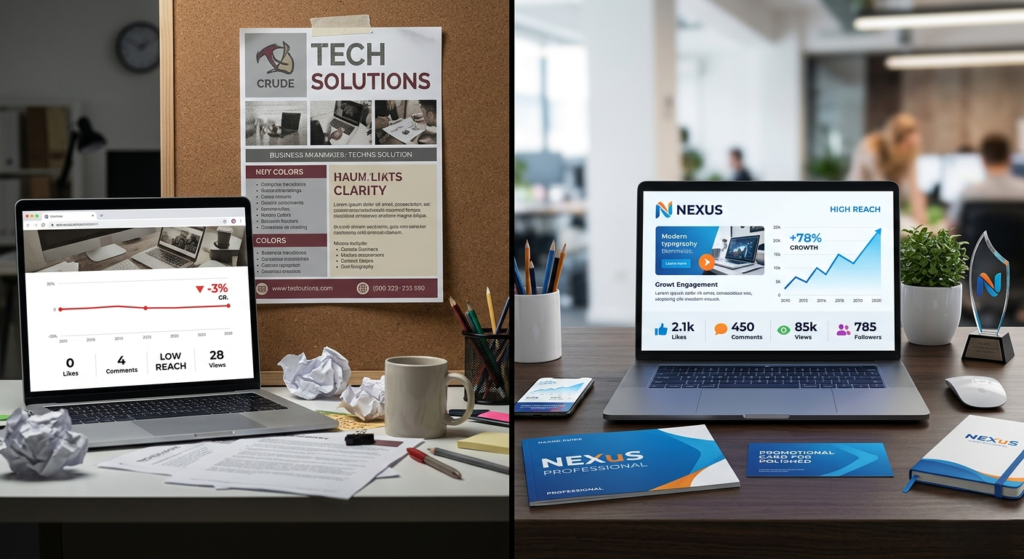
Research shows users form a visual judgment about a brand in milliseconds. That means before they read your message, they already “feel” your brand.
A skilled graphic designer helps you:
- Build instant trust
- Improve conversion rates
- Strengthen brand identity
- Stand out from competitors
- Increase perceived value
On the other hand, poor design creates:
- Low trust
- High bounce rates
- Weak brand recall
- Lost customers
In simple words:
- Good design makes your business look expensive
- Bad design makes your business look risky
Step-by-Step: How to Choose a Graphic Designer (2026 Framework)
Evaluate their portfolio with intention
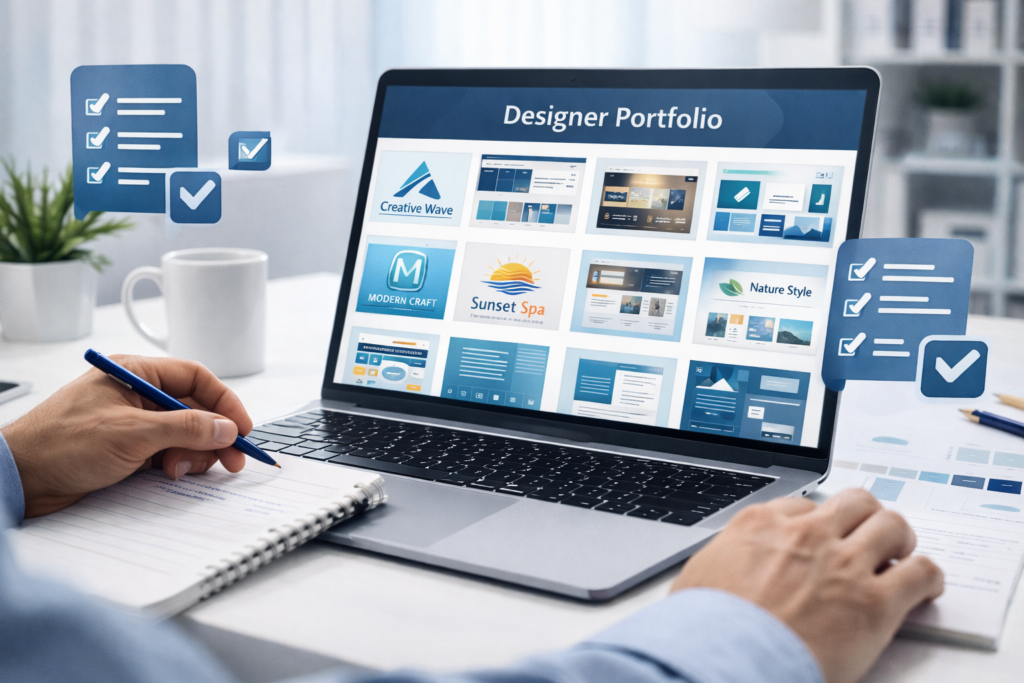
A portfolio is the most reliable signal of what a designer will produce for you. Look beyond surface-level aesthetics. Ask yourself: does this work feel intentional? Is there a clear visual thinking process behind it, or does it look like a collection of random executions?
Strong portfolios demonstrate consistency across different projects, an ability to serve different brand personalities while maintaining quality, and evidence of real-world application — not just concept work.
Pay particular attention to projects that are similar to what you need, whether that is brand identity, digital product design, print collateral, or marketing materials.
Understand their creative style — and whether it matches yours
Every designer develops a natural aesthetic direction over time. Some lean toward clean minimalism; others gravitate toward bold, expressive visual identities. Neither approach is superior — what matters is fit.
Before approaching any designer, define your own brand personality in a few words. Is your brand warm and approachable, or authoritative and precise? Playful and vibrant, or refined and understated? A designer who excels at maximalist consumer branding may struggle to translate a fintech company’s need for restrained, trustworthy design — and vice versa.
Look for a designer whose natural style overlaps significantly with the direction you are heading. You should not have to fight the designer’s instincts at every turn.
Test for strategic thinking, not just execution
This is the single most important differentiator between a good designer and a great one. A designer who thinks strategically will ask questions about your audience, your competitors, your business model, and your growth goals before touching a single design tool.
When speaking with a candidate, ask: “Before you start a brand identity project, what do you need to understand about the business?” A strategically mature designer will want to know who the customer is, what emotion the brand should evoke, and how the design will be used in the real world.
If the first conversation goes straight to color palettes and font choices without any business context, that is a signal the designer may produce work that looks good in isolation but does not serve your objectives.
Assess communication quality early
Design is a collaborative process. The quality of the final output depends heavily on how clearly the designer can ask questions, receive feedback, explain their decisions, and manage expectations throughout a project.
Pay attention to how responsive and articulate a designer is during your initial conversations. Are their emails clear and professional? Do they listen carefully and confirm understanding, or do they rush toward deliverables? Do they ask follow-up questions that demonstrate they have thought about your brief carefully?
Poor communication is the root cause of most failed design projects — not lack of talent. A highly skilled designer who cannot communicate clearly will produce frustrating results more often than a slightly less skilled designer who communicates exceptionally well.
Decide between a freelancer and an agency
Both options have genuine merit, and the right choice depends on where your business currently is and where it is heading.
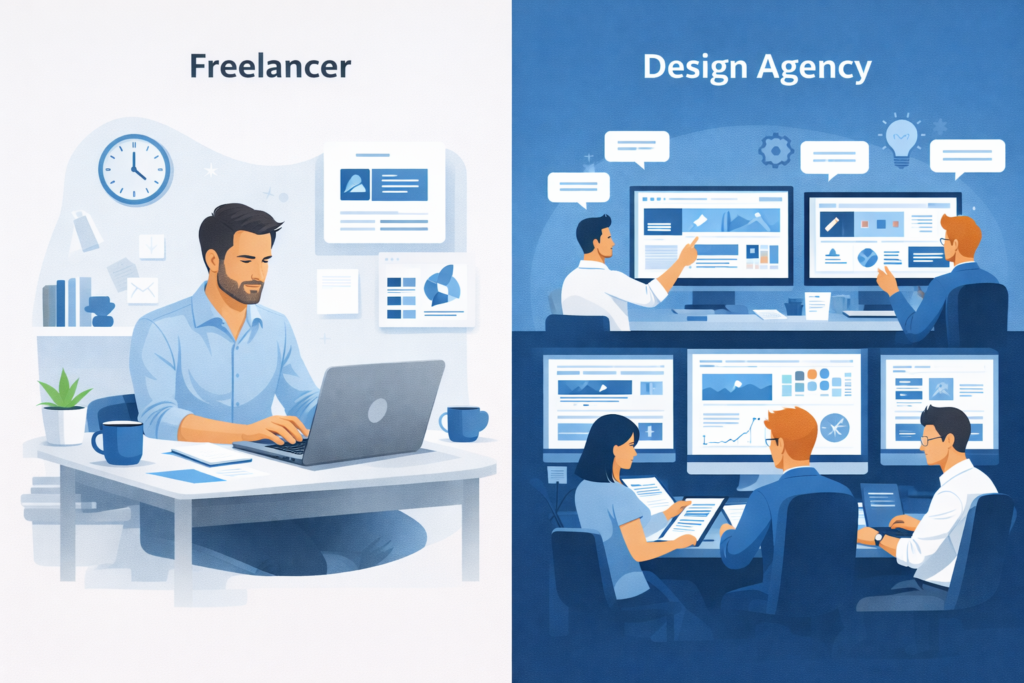
Freelance designer
- More affordable for focused projects
- Direct relationship with the person doing the work
- Flexible and agile for smaller briefs
- Limited capacity during high-demand periods
- Single skill set — may not cover all needs
- Less consistent availability long-term
Design agency
- Full team covering multiple disciplines
- Stronger strategic and branding expertise
- More reliable for ongoing, scaled work
- Higher cost, especially for early-stage businesses
- Less direct contact with individual creatives
- May feel overly process-heavy for simple projects
As a general rule: freelancers are an excellent choice for early-stage businesses with focused, well-defined design needs. Agencies become more valuable when your brand is scaling, when consistency across many touchpoints is critical, or when you need strategic guidance alongside execution.
Look for verified results, not just great-looking work
Beautiful design that does not produce business outcomes is a missed opportunity. When reviewing a designer’s experience, look for evidence of real-world impact alongside aesthetic quality. Client testimonials, case studies, and before-and-after comparisons all tell a richer story than portfolio images alone.
If possible, speak directly with a previous client. Ask whether the designer delivered on time, how they handled feedback and revisions, and whether the final work achieved its intended goal — not just whether it looked impressive.
Reframe how you think about pricing
It is tempting to optimize for the lowest possible cost, especially when budgets are tight. But underpriced design almost always costs more in the long run — through multiple rounds of revisions, the need to redo work that did not land, or the ongoing cost to your brand’s credibility of presenting unprofessional visuals to the market.
A more useful question than “what is the cheapest option?” is “what level of design quality does this project require to achieve its goal?” Once you have answered that honestly, you can find a designer whose pricing reflects that standard — whether that is a mid-range freelancer or a specialist agency.
Good design, executed well, pays for itself through stronger conversions, better brand retention, and reduced need for future redesigns.
Start with a scoped test project
Before committing to a large or long-term engagement, structure a small, clearly defined test project. This allows both parties to assess fit without excessive risk. You will learn how the designer interprets a brief, how they manage the process, how they receive feedback, and whether the quality of their output matches what you saw in their portfolio.
A test project might be a single brand element, a social media template set, or a landing page design. Keep the brief specific and the scope contained, then evaluate the result honestly before proceeding.
Common mistakes to avoid
- Hiring based on price alone. The cheapest option rarely delivers the outcome you need. Evaluate value, not just cost.
- Skipping the portfolio review. Even if a designer comes highly recommended, always review their previous work carefully and look for relevance to your project type.
- Starting without a clear brief. Vague briefs produce generic outcomes. The more clearly you can describe your goals, audience, and constraints, the better work you will receive.
- Ignoring communication signals. If a designer is slow, unclear, or dismissive in pre-project conversations, that behaviour will not improve once work begins.
- Designing toward your competitors. Studying the market is useful; copying it defeats the purpose of having a distinct brand identity.
- Treating design as a one-time exercise. Brands evolve. A strong relationship with a trusted designer allows your visual identity to grow alongside your business.
What to ask before you hire
These questions will surface the information you need to make a confident decision:
- What information do you need from me before starting a project?
- Can you walk me through your design process, from brief to final delivery?
- How do you approach a rebrand or identity project for a business you are unfamiliar with?
- How do you handle feedback, and what does your revision process look like?
- Can you share a project where the design produced a measurable business result?
- What would you do differently if you could redo one of your past projects?
Conclusion
Choosing the right graphic designer is one of the most consequential decisions you will make for your brand. The process takes time and care — but the returns are substantial. A designer who genuinely understands your business, thinks strategically, and communicates clearly will not just produce attractive work. They will give your brand the visual foundation it needs to compete, connect, and grow.
Evaluate carefully, ask the right questions, start with a scoped test, and invest at a level that reflects what the outcome is actually worth to your business. The right creative partner is out there — and finding them changes everything.
Frequently Asked Questions (FAQs)
Review their portfolio with attention to projects similar to yours, assess how they communicate in early conversations, and ask questions that reveal how they think about business goals — not just aesthetics. A short test project before any major commitment is also an effective way to verify quality and fit in practice.
It depends on your business stage and the complexity of your needs. Freelancers typically offer more flexibility and affordability for focused, well-scoped projects. Agencies provide broader capabilities, stronger strategic support, and greater consistency for businesses scaling their brand across multiple channels. Many businesses start with a trusted freelancer and transition to an agency partnership as their requirements grow.
Pricing varies significantly based on experience, project complexity, and whether you are working with a freelancer or an agency. Rather than anchoring to a number, define what you need the design to achieve — then find a designer whose quality and experience align with that standard. Investing appropriately at the outset almost always costs less than correcting poor design later.
Beyond technical proficiency in design tools, a strong designer in 2026 should understand branding strategy, visual communication psychology, and how design functions across digital and physical contexts. Familiarity with UI/UX principles, motion design, and cross-platform consistency is increasingly valuable as businesses operate across more touchpoints than ever before.
Design directly influences how potential customers perceive your brand before any other interaction takes place. A professional, consistent visual identity builds trust, communicates quality, and makes marketing more effective. Businesses with strong design systems typically see better conversion rates, stronger brand recall, and reduced friction in sales — all of which compound over time.