
What Is SEO and How It Works in 2026 (Beginner’s Guide)
- Rehman
- 4:10 am
- April 8, 2026

What is SEO and how it works is one of the most common questions for beginners entering the digital world.
SEO (Search Engine Optimization) is the process of improving your website so it ranks higher on search engines like Google. In 2026, SEO is not just about keywords—it’s about user experience, content quality, and technical performance.
If you want to grow your business online, understanding what is SEO is essential. Without SEO, your website may never reach the right audience.
In this beginner’s guide, you’ll learn what is SEO, how it works, and how you can use it to increase traffic, generate leads, and grow your business.
What Is SEO? (Simple Explanation)
SEO stands for Search Engine Optimization.
In simple terms, SEO is the process of optimizing your website so that it appears higher in search engine results when people search for related topics.
For example, if someone searches “digital marketing services,” SEO helps your website appear on the first page of Google.
Understanding what is SEO helps businesses:
- Increase visibility
- Attract targeted traffic
- Build trust and credibility
- Generate more leads
Why SEO Is Important in 2026
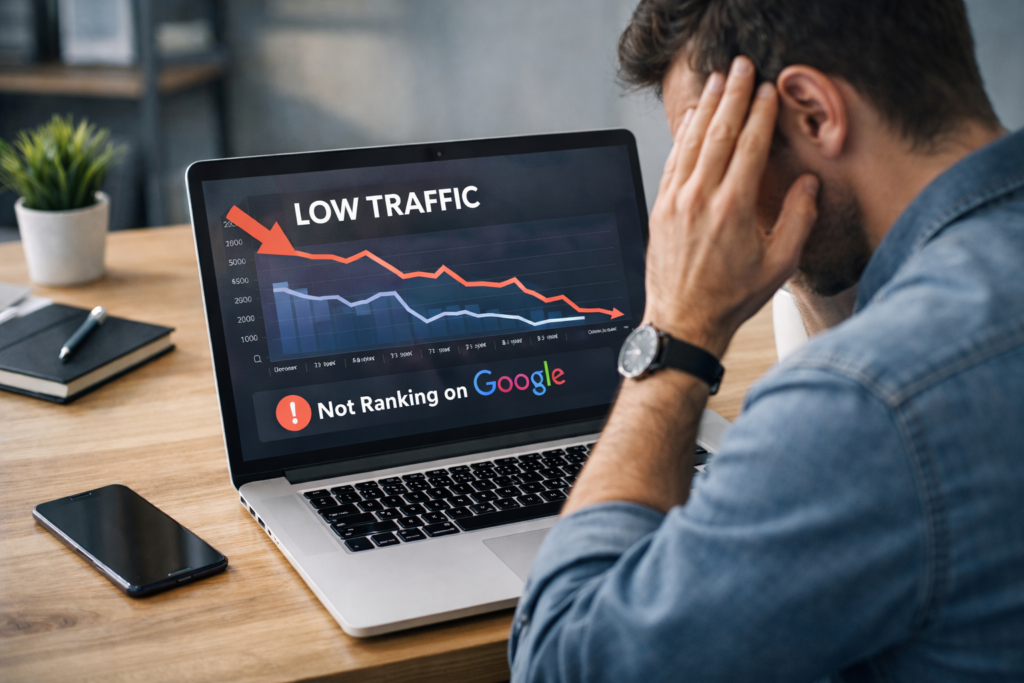
SEO has become more important than ever because online competition is increasing rapidly.
If your website is not optimized, you are losing potential customers every day.
Here’s why SEO matters:
- Most users click on top search results
- Organic traffic is free and long-term
- SEO builds credibility and trust
- It improves user experience
How SEO Works (Step-by-Step Process)
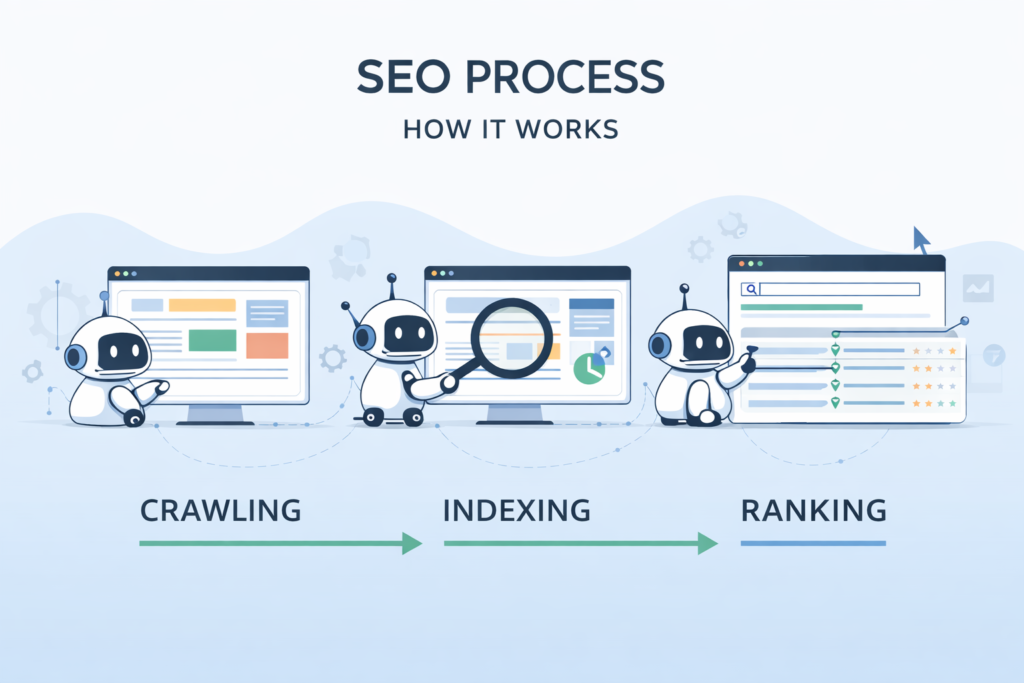
To truly understand what is SEO, you need to know how it works.
Search engines like Google follow a process:
1. Crawling
Search engines scan your website using bots.
2. Indexing
Your pages are stored in Google’s database.
3. Ranking
Google ranks your website based on relevance, quality, and performance.
This is why website speed, content quality, and keyword usage are important in SEO.
Types of SEO You Must Know
Understanding what is SEO also means knowing its main types.
1. On-Page SEO
Optimizing content, keywords, headings, and images.
2. Off-Page SEO
Building backlinks and improving website authority.
3. Technical SEO
Improving website speed, mobile-friendliness, and structure.
Key Elements of SEO in 2026
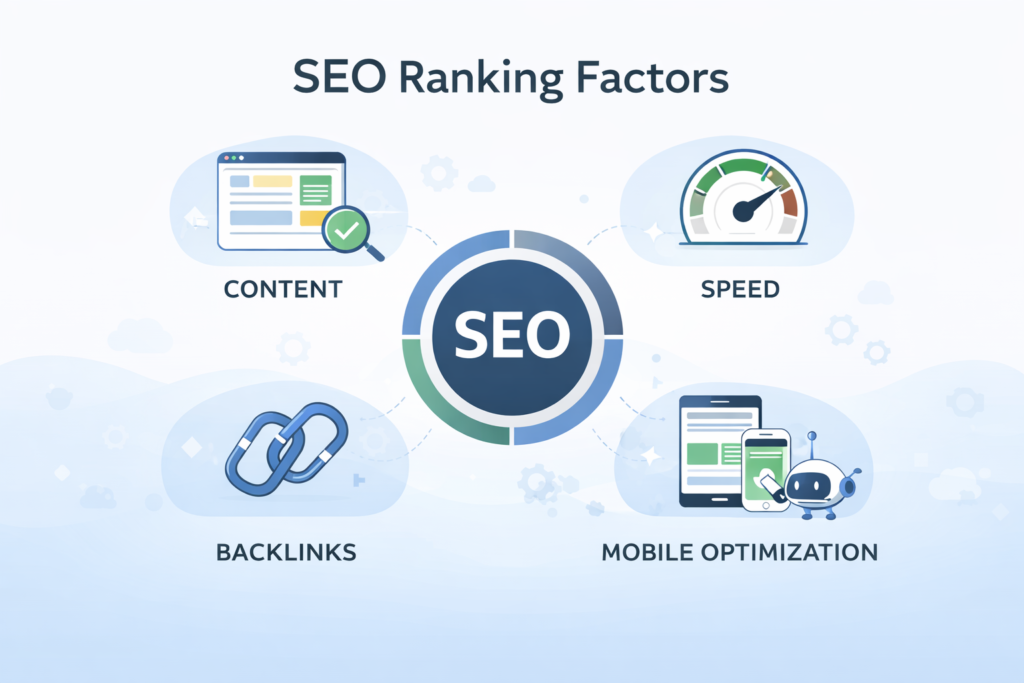
SEO is evolving, and in 2026, these factors matter most:
- High-quality content
- User experience (UX)
- Mobile optimization
- Fast loading speed
- Keyword relevance
- Backlinks
All these elements work together to improve your rankings.
Common SEO Mistakes Beginners Make
Many beginners misunderstand what is SEO and make these mistakes:
- Keyword stuffing
- Ignoring mobile users
- Slow website speed
- Poor content quality
- No internal linking
Avoiding these mistakes can significantly improve your SEO performance.
How SEO Helps Generate Traffic and Leads

SEO is not just about rankings—it’s about results.
When you understand what is SEO and apply it correctly:
- You attract the right audience
- Increase website traffic
- Improve conversions
- Generate leads consistently
Basic SEO Tips for Beginners (Quick Start)
If you’re just starting, follow these simple tips:
- Use the right keywords naturally
- Write helpful and valuable content
- Optimize images with ALT text
- Improve website speed
- Use internal linking
- Stay consistent
SEO is a long-term strategy, but the results are worth it.
Final Thoughts
Understanding what is SEO and how it works can completely transform your online presence.
SEO is not a one-time task—it’s an ongoing process that requires consistency, strategy, and patience.
By applying the techniques in this guide, you can improve your rankings, attract more visitors, and grow your business successfully in 2026. Choose Alpha Digitix
Frequently Asked Questions (FAQs)
SEO is the process of improving your website to rank higher on search engines.
SEO usually takes 3–6 months to show results.
Yes, organic SEO is free but requires time and effort.
Yes, anyone can learn SEO with the right guidance and practice.